

Google Ads Experiment Center 2026: A Smarter Way to Run Google Ads Experiments
Table of content:
A few days ago, Google introduced a major update to paid search testing: the Google Ads Experiment Center.
While it may look like a structural update inside the interface, it marks a significant shift in how advertisers approach Google Ads experiments 2026, incrementality testing, and performance validation.
For ecommerce and DTC brands, this is not cosmetic. It's infrastructure.
What Is the Google Ads Experiment Center?
The Google Ads Experiment Center is a centralised hub inside Google Ads where advertisers can manage:
- Campaign Experiments (A/B testing)
- Lift Studies (incrementality measurement)
Previously, these tools were scattered across the platform. Now, they live under one unified dashboard, making Google Ads experiments 2026 easier to create, manage, and compare.
For ecommerce brands running multiple campaigns across Search, Shopping, and Performance Max, this reduces complexity and improves clarity.
Why This Matters for Ecommerce Brands
Paid search in 2026 is not about adding more keywords. It’s about testing systems.
The Experiment Center enables brands to:
- Validate Smart Bidding strategies before full rollout
- Test creative variations safely
- Compare targeting approaches
- Measure incremental lift, not just last-click results
- Reduce scaling risk
This is especially important for brands investing heavily in automation and Performance Max, where changes can materially impact spend allocation.
When structured properly, Google Ads experiments 2026 become a growth lever rather than a reporting exercise.
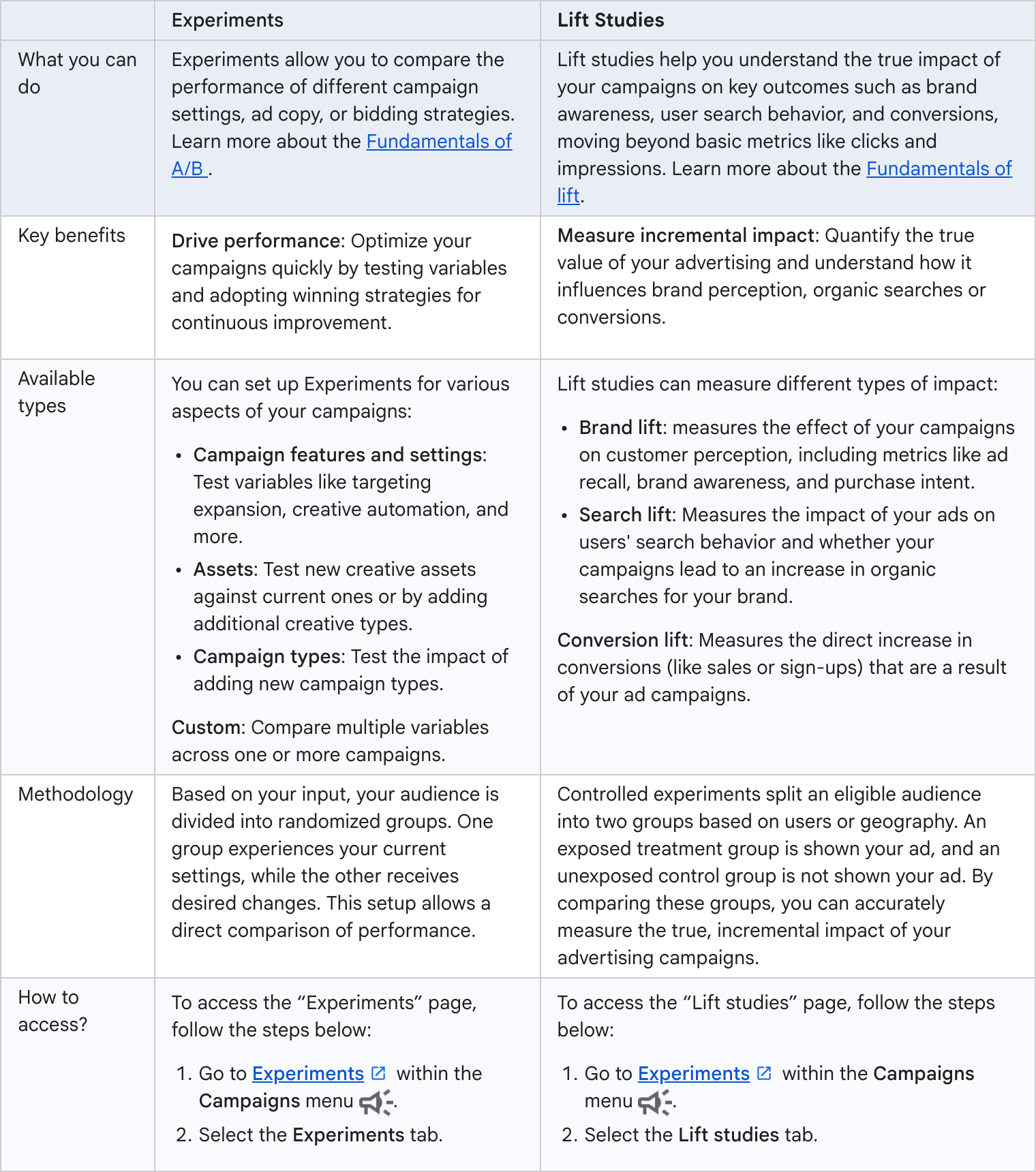
Campaign Experiments vs Lift Studies
Understanding the difference is crucial if you want to use Google Ads lift studies ecommerce properly.
Campaign Experiments
Campaign experiments allow you to split traffic between:
- A control version
- A test variation
You can test:
- Smart Bidding strategies
- Budget shifts
- Creative assets
- Campaign structure
- New campaign types
Google then determines statistical significance.
This is tactical validation. It answers: which version performs better?
Lift Studies
Lift studies go further.
They measure incremental impact using exposed vs control groups to quantify:
- Brand lift
- Search lift
- Conversion lift
For ecommerce brands, Google Ads lift studies are essential when:
- Scaling prospecting campaigns
- Testing upper funnel YouTube or Display
- Validating Performance Max incrementality
- Measuring beyond last-click attribution
This answers a different question: Would those conversions have happened anyway?
If you care about profitability and contribution margin, lift measurement is not optional.
How to Access Google Ads Experiment Center
To access Google Ads experiments 2026:
- Log into Google Ads
- Navigate to Campaigns
- Click Experiments
- Enter the Experiment Center dashboard
From there, you can:
- Launch new campaign experiments
- Monitor active tests
- Review lift study results
- Compare completed experiments
Everything is centralised.
Strategic Implications of Google Ads Experiments 2026
This update reflects broader platform shifts:
1. Automation Requires Validation
As Google leans into automation, structured testing becomes critical.
2. Measurement Is Moving Beyond Last Click
Incrementality is becoming standard for mature accounts.
3. Experimentation Is Now Infrastructure
Brands that treat Google Ads experiments 2026 as occasional tests will struggle.
Brands that build experimentation systems will compound growth.
FAQs About Google Ads Experiments 2026
What are Google Ads experiments 2026?
They are structured A/B tests inside the new Experiment Center that allow advertisers to validate campaign changes before scaling them.
What are Google Ads lift studies?
Google Ads lift studies measure incremental business impact by comparing exposed audiences to control groups. They show whether ads genuinely drive additional conversions.
Can all advertisers access lift studies?
Campaign experiments are widely available. Lift studies may require eligibility based on account size, spend, and campaign type.
Do Google Ads experiments improve performance automatically?
No. They improve decision-making. Structured testing reduces risk and increases confidence before budget is increased.
Should ecommerce brands prioritise lift studies?
If you are scaling prospecting, investing in Performance Max, or running YouTube at scale, yes. Lift studies provide clarity that last-click reporting cannot.
What Ecommerce Brands Should Do Next
If you are investing serious budget into Google Ads, you cannot rely on assumptions. You need structure.
At Webtopia, we build paid search systems designed around:
- Structured Google Ads experiments 2026 frameworks
- Incrementality validation through Google Ads lift studies
- Automation aligned with creative and funnel intent
- Clear testing roadmaps before scaling
Testing without a system creates noise. Testing within a structured framework creates compounding performance.
If you want to review whether your current Google Ads account supports structured experimentation and incrementality measurement, book a call with our paid search team.
Smarter testing builds stronger growth!
Author: Julieta Cabrera
Get weekly expert insights!
.png)

.png)
.png)
Turn your ad spend into real growth.
At Webtopia, we don’t just run ads. We build scalable growth systems designed for ambitious DTC brands. By combining performance marketing, creative strategy, and data-backed execution, we help founders scale without sacrificing profitability. Our clients see an average 6X blended ROAS every month, because great brands deserve more than short-term wins.
Book your call today and let’s build your next growth chapter together.
