

The Future of Paid Search in 2026: AI, Strategy Shifts and Audience Insights
.png)
Table of content:
Are you wondering how paid search in 2026 will actually work in practice?
The short answer: it is no longer just about keywords. It is about AI collaboration, diversified channel strategy and deep audience insight.
As automation matures and platforms evolve, brands that cling to outdated assumptions will struggle. The ones that win will combine human strategy with machine intelligence, expand beyond traditional search placements, and build campaigns rooted in real customer behaviour.
In this guide, we break down the key trends shaping the future of paid search, what they mean for ecommerce brands, and how to adapt your strategy now for long-term growth.
What You’ll Learn
- How AI is transforming paid search strategies in 2026
- Why “intent-only” thinking is outdated
- How to diversify beyond traditional search ads
- How to use audience insights to improve ad copy and performance
- Practical next steps for sustainable growth
How AI Is Transforming Paid Search in 2026
The biggest shift in paid search 2026 is the deep integration of AI across every campaign layer.
Bidding, audience expansion, creative testing, search query analysis, and even performance forecasting are increasingly driven by machine learning systems. But here is the key nuance:
AI doesn'ot replace strategy, it amplifies it.
What This Means in Practice
Instead of manually adjusting bids or reacting weeks later, marketers now:
- Feed algorithms with richer data inputs
- Use audience signals to guide expansion
- Test creative variations at scale
- Identify emerging micro-trends early
Feed the Algorithm Properly
AI performs best when you:
- Upload clean conversion data
- Share audience insights and first-party data
- Monitor search term reports consistently
- Adjust creative based on behavioural signals
The brands seeing strong results in AI-powered paid search are not “setting and forgetting”. They are collaborating with automation.
Real-World Example
One of our partners, an ecommerce brand specialising in patterned leggings, began seeing a rise in highly specific long-tail searches ahead of Halloween. Queries such as “gothic leggings”, “emo styles” and “alternative Halloween outfits” were gaining traction.
By analysing search query data and layering in AI-driven audience expansion, we built dedicated ad sets targeting these emerging segments.
The result was a clear uplift in seasonal revenue, driven by a niche audience the brand had not actively pursued before.
That is the real advantage of combining human pattern recognition with machine-level detection.
Why Intent-Only Thinking Is Outdated
Many brands still believe that paid search is purely intent-based. "If someone is not searching, it is not worth targeting."
This is no longer true.
Myth 1: Google Ads Is Only About High Intent Search
While high-intent queries remain valuable, platforms now offer powerful discovery and mid-funnel placements.
These include:
- Video placements
- Inbox placements
- Discovery feeds
- Audience-led expansion campaigns
Restricting strategy to bottom-funnel keywords limits scale and suppresses brand growth.
Myth 2: Automation Means Hands-Off
Automation does not mean disengagement.
In 2026, performance depends on:
- Active search term review
- Creative testing
- Funnel-level analysis
- Cross-channel integration
AI requires direction. Without strategic input, performance plateaus.
Diversifying Paid Search Channels in 2026
To future-proof your paid search strategy, diversification is essential.
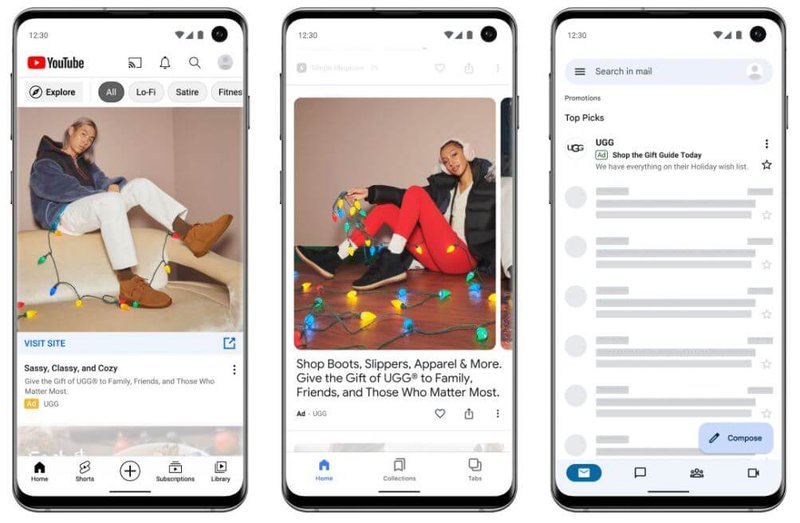
1. Gmail and Inbox Placements
Often overlooked, inbox ads can drive:
- Remarketing conversions
- Promotional campaign uplift
- Strong engagement from warm audiences
They work particularly well for ecommerce promotions where timing matters.
2. YouTube and Short-Form Video
Video is no longer optional.
Short-form formats provide:
- Scalable reach
- Strong audience targeting
- Mid-funnel influence
When paired with search campaigns, video supports brand recall and improves overall conversion efficiency.
3. Discovery and Display
Discovery placements allow you to:
- Reach users earlier in the buying journey
- Introduce products before search behaviour begins
- Layer messaging across funnel stage
Layered Strategy Example
- Use search campaigns for high-intent traffic
- Support with video for awareness and trust
- Retarget via inbox or display
- Analyse cross-channel data to refine messaging
This layered model is increasingly central to paid search growth in 2026.
Audience Insights: The Real Competitive Advantage
Technology evolves quickly. Human psychology does not.
The brands that outperform competitors in search marketing 2026 are the ones who understand their audience deeply.
How to Strengthen Audience Insight
1. Analyse Historical Performance
Review:
- Top-performing headlines
- Offers that converted
- Messaging themes that resonated
2. Build Clear Customer Profiles
Go beyond demographics.
Understand:
- Lifestyle drivers
- Emotional triggers
- Purchase motivations
- Objections
For example, messaging for a price-sensitive shopper differs significantly from messaging for a convenience-led family buyer.
3. Study Search Queries
Search phrasing reveals:
- Pain points
- Intent signals
- Emotional context
Long-tail queries often uncover hidden opportunities.
4. Review Competitor Messaging
Observe:
- Hooks competitors use
- Offers emphasised
- Tone of voice
Adapt what works while maintaining differentiation.
Creative Strategy in AI-Driven Paid Search
Generic ad copy underperforms.
In AI-powered campaigns, creative volume and testing matter more than ever.
Focus on:
- Personalised messaging per funnel stage
- Clear value propositions
- Emotional resonance
- Offer clarity
For example:
- Research-stage user: educational messaging
- Ready-to-buy user: urgency, delivery, guarantees
The algorithm can distribute the right message, but only if you provide strong variations.
The Future of Paid Search: Human Strategy + AI Execution
In 2026, sustainable growth comes from balance.
Not aggressive short-term tactics blind trust in automation.
But structured collaboration.
Winning Brands Will:
- Build robust first-party data systems
- Diversify channel strategy
- Test creative consistently
- Analyse search insights weekly
- Treat AI as a partner, not a shortcut
Frequently Asked Questions
1. How is AI changing paid search in 2026?
AI enables automated bidding, audience expansion, predictive performance modelling, and real-time optimisation. However, results improve significantly when paired with human strategy, data quality, and structured creative testing.
2. Is paid search still intent-driven?
Intent remains important, but limiting strategy to bottom-funnel keywords reduces scale. Discovery, video, and audience-based placements now play a critical role in influencing purchase behaviour before search occurs.
3. Should ecommerce brands diversify beyond traditional search ads?
Yes. Diversification across video, inbox, and discovery placements improves reach, supports brand building, and stabilises performance across funnel stages.
4. How do audience insights improve paid search performance?
By analysing search queries, historical ad performance, and competitor messaging, brands can craft more relevant, emotionally aligned copy that increases engagement and conversion rates.
5. Is automation enough for long-term growth?
No. Automation requires strategic input, clean data, and consistent creative testing. Sustainable performance comes from active management, not passive execution.
How Webtopia Helps Ecommerce Brands Win in Paid Search
At Webtopia, we work with founder-led ecommerce brands scaling from strong foundations to structured, data-led growth.
Our paid search approach combines:
- AI-driven optimisation frameworks
- Deep audience analysis
- Cross-channel campaign architecture
- Creative testing systems
- Funnel-level profitability tracking
We do not chase vanity metrics.
We build scalable acquisition systems aligned with margin and long-term growth.
If you are preparing your strategy for paid search in 2026, now is the time to evolve.
👉 Explore our paid search services
👉 Or book a strategy call with our team
Let’s build a system designed to compound.
Author: Lucy Perry
Get weekly expert insights!
.png)

.png)
.png)
Turn your ad spend into real growth.
At Webtopia, we don’t just run ads. We build scalable growth systems designed for ambitious DTC brands. By combining performance marketing, creative strategy, and data-backed execution, we help founders scale without sacrificing profitability. Our clients see an average 6X blended ROAS every month, because great brands deserve more than short-term wins.
Book your call today and let’s build your next growth chapter together.
